A New 2026 Study Showed My Knife Was Shaving Plastic Into My Family's Food With Every Single Cut — And the Swap Cost Less Than a Routine Grocery Run
An American mom read one new 2026 study and did the math on her own cutting board. It's the number per knife stroke — not per year — that changed how her family cooks.

I think I'm a pretty careful mom when it comes to what my family eats.
We shop at the local farmers' market in our neighborhood most weekends. I cook from scratch nearly every night — proper meals with fresh vegetables, quality meat from the butcher, nothing from a package if I can help it. My two kids eat better than most adults I know.
So when I came across a university study while scrolling through my phone one evening after the kids had gone to bed, I genuinely felt sick to my stomach.
A 2026 study found a single stroke of your knife can shave 100 to 300 microscopic plastic particles off a plastic board straight into your food — and one board can shed thousands of fragments in a single use.
Not once a year — every single time. Multiply 100 to 300 particles by every chop, dice and slice, meal after meal, and you're grinding thousands of invisible plastic fragments into food you thought was plastic-free. And I'd been doing it on the same plastic board for years, feeding it to my family without a second thought.
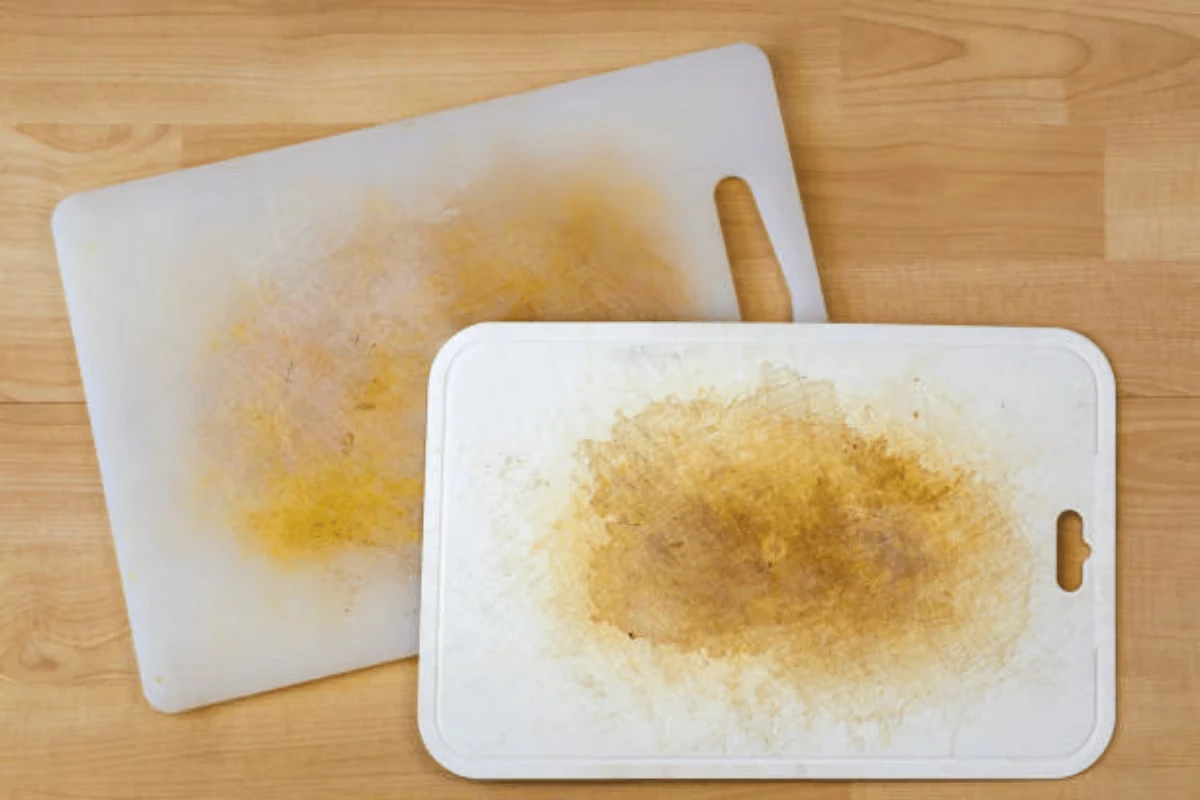
I walked into my kitchen that night and picked up my cutting board — the white plastic one from a discount store I'd been using for about 18 months. I ran my finger across it. Deep grooves, scratches everywhere, faint stains from beetroot that wouldn't come out no matter how hard I scrubbed.
Every single one of those marks was a place where plastic had been shaved off by my knife — and ended up in our dinner.
I threw it in the bin that night. And then I spent the next two weeks going down a research rabbit hole that completely changed how I think about food safety in my kitchen.
The Science Every Home Cook Needs to Know

The research that rattled me was published in Environmental Science & Technology — one of the most respected scientific journals in the world. Researchers at North Dakota State University tested what happens when you chop food on a standard plastic cutting board.
Their findings were staggering. A single chopping session releases between 1,536 and 7,680 microplastic particles directly onto your food. Over a year of regular use, that could mean up to 79.4 million microplastic particles entering your body — or roughly 50 grams of pure plastic.
What are microplastics? Microplastics are tiny fragments of plastic less than 5mm in size. They're created when plastic items break down through wear and mechanical force — like a knife cutting across a cutting board thousands of times. Once you ingest them, some may accumulate in your gut, blood, and organs over time.
Then in 2025, researchers at Nanjing University published an even more alarming follow-up in Environmental Health Perspectives. They fed mice food that had been prepared on plastic cutting boards over 12 weeks and tracked what happened.
The results? Mice showed significant changes in gut bacteria, altered liver function, and signs of intestinal inflammation. The study concluded that no plastic cutting board should be considered entirely "safe."
This isn't some fringe theory, either. Time Magazine covered the story late last year, and the NDSU research has been cited across major medical publications. The science is clear: plastic cutting boards release significant quantities of microplastics into food, and the long-term health effects are a genuine concern.
As a mom who spends an hour a day at the kitchen counter, this hit me harder than any health news I'd read in years.
Why Switching to Wood or Glass Isn't the Answer
My first thought was obvious: grab a wooden board from a local kitchen store and call it done.
But then I actually looked into it — and it turns out every common cutting board material has serious problems.
Wooden boards are porous. Bacteria, moisture, and food residue seep into the grain and become nearly impossible to fully sanitize. The knife grooves become breeding grounds for nasties like Salmonella and E. coli. And if you don't oil them regularly, they warp, crack, and grow mold — not exactly ideal in our humid summers.
Bamboo boards have the same porosity issues, and many are glued together with adhesives that can contain formaldehyde — a known carcinogen.
Glass boards are hygienic, sure — but they absolutely wreck your knives. Every chop on glass rapidly dulls your blade, meaning less control, more force, and constant trips to get them sharpened. Anyone who's invested in a decent set of Victorinox or Global knives knows that pain.
Cutting Board Materials — The Problems
I was genuinely stuck. I'd thrown out the plastic board, but there was nothing I felt good about replacing it with. I even went into a kitchen store nearby and spent 20 minutes staring at the cutting board aisle, Googling every material on my phone.
Then my friend Sarah — who did a food science degree at Melbourne Uni before going into catering — texted me something that changed everything.
"Have You Looked Into Titanium?"
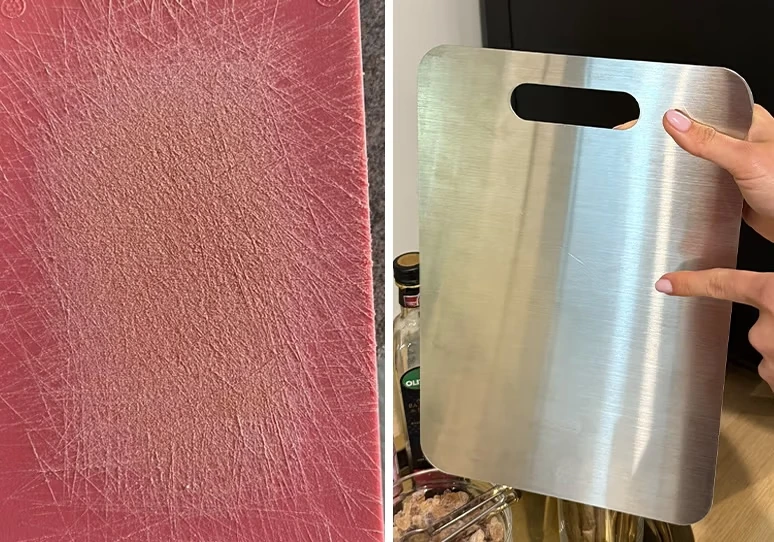
Honestly? I hadn't. Titanium sounded like something from a fighter jet, not a kitchen counter at home.
But Sarah explained that titanium is actually one of the most food-safe materials on the planet. It's used in medical implants because it's completely biocompatible and non-toxic. It's been approved for food contact applications. And it has properties that make it uniquely suited to the kitchen.
So I started reading — and the more I learned, the more I couldn't believe this wasn't already mainstream.
Titanium is completely non-porous. Unlike wood or bamboo, there's nowhere for bacteria, moisture, or food particles to hide. A quick rinse under running water and it's clean — no scrubbing, no bleach, no special maintenance.
Zero microplastics. It's a pure metal. There are no plastic particles to release. Your food touches nothing but a clean, inert, food-safe surface.
Gentle on knives. This is the one that surprised me. Unlike glass, ceramic, or steel — which all destroy your edges — titanium's surface actually helps keep blades sharper for longer.
And titanium dioxide, the oxide layer that naturally forms on the surface, has been extensively studied for antibacterial properties. Research published in Scientific Reports has shown it's effective against common foodborne pathogens including E. coli and Staphylococcus aureus.
Honestly, I felt like I'd been living under a rock. This material ticks every single box — and I'd never heard of it being used in a cutting board.
The Brand That Kept Coming Up
Finding a titanium cutting board that was available in the United States, well-made, and not ridiculously expensive took some digging. A lot of what I found was either industrial-grade stuff or cheap imports that weren't genuine titanium.
But one name kept appearing in the forums, reviews, and Facebook cooking groups I checked: Tivano Pro.
Tivano Pro makes a 100% pure titanium cutting board designed specifically for home cooks. It's got over 1,800 verified reviews with a 4.7-star rating, and the feedback from buyers was overwhelmingly positive.
No microplastics. No bacteria. No dull knives. No staining. No odors. Plus a 30-day return policy, less shipping — so if it didn't live up to the hype, I could just send it back.
I ordered one that evening. I watched for the shipping confirmation and was eager to try it when it arrived.
First Impressions
When it arrived, the first thing I noticed was how light it was. I'd expected something heavy like a steel plate, but it felt elegant and modern. The dual-sided design means I use one side for raw meat and the flip side for vegetables — no cross-contamination, no fussing with multiple boards.
First cook: I did a stir-fry. Chopped bell pepper, green onions, garlic, ginger. The knife glided beautifully. No dragging like you get on plastic, no terrifying scraping like glass. Just clean, satisfying cuts.
And cleanup? I rinsed it under running water, gave it a quick wipe. Done. No scrubbing grooves. No lingering garlic smell. No turmeric stains. It looked exactly the same as when I'd taken it out of the box.
➜ Check If Tivano Pro Is Available in the United StatesThree Months Later — Here's the Honest Truth
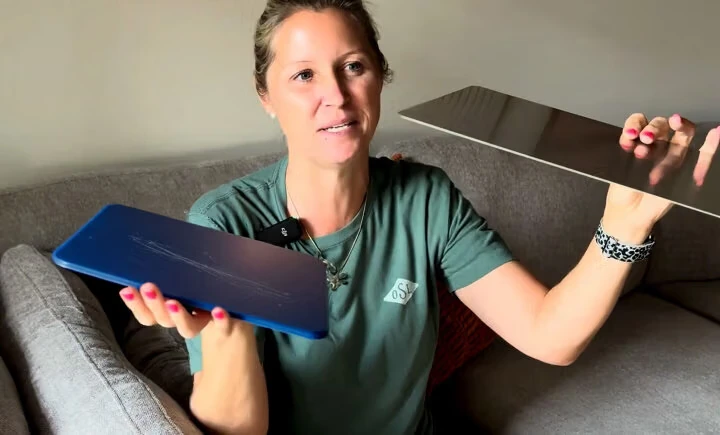
I've now used my Tivano Pro board every single day for three months. Here's what I can report:
My knives are noticeably sharper. I used to sharpen my Global chef's knife every couple of weeks. Haven't touched the sharpener once since switching. That alone is worth it.
Zero odors, ever. I cook with garlic, onion, and fish regularly. My old boards would hold those smells for days. Tivano Pro? Nothing. A quick rinse and it smells completely neutral.
It still looks brand new. Not a single scratch, stain, or sign of wear. After three months of heavy daily use, it's identical to the day it arrived.
Peace of mind. This is the biggest one. I don't worry anymore about what invisible debris might be contaminating the meals I make for my kids. I know exactly what their food is touching: pure titanium — an inert, non-toxic metal that doesn't shed, leach, or degrade.
Tivano Pro vs. Everything Else
| Feature | Tivano Pro (Titanium) | Plastic | Wood |
|---|---|---|---|
| Microplastic-free | ✓ | ✗ | ✓ |
| Antibacterial surface | ✓ | ✗ | ✗ |
| BPA & chemical free | ✓ | ✗ | ✓ |
| Knife-friendly | ✓ | ✓ | ✓ |
| Odor & stain resistant | ✓ | ✗ | ✗ |
| Dishwasher safe | ✓ | ✓ | ✗ |
| Lifetime durability | ✓ | ✗ | ✗ |
| No maintenance needed | ✓ | ✓ | ✗ (needs oiling) |
What About the Price?

Look, I won't sugarcoat it — a titanium cutting board costs more upfront than the $15 plastic board from a discount store.
But here's how I think about it.
I've bought a new plastic cutting board roughly every 12 months for the past 15 years. That's at least 15 boards. Some cost $10, some $25. Plus the cost of getting knives sharpened after they were wrecked by glass boards during my "experimentation phase." All up, I've easily spent $300-400 on cutting boards and knife maintenance.
Tivano Pro is built to last a lifetime. One purchase. Done. No replacements, no maintenance, no knife sharpening bills. When you look at it that way, it's the cheapest cutting board I've ever bought.
Right now they're running a promotion with 70% off a single board — which brings the price down to less than a big grocery run. Honestly, at that price, it's a no-brainer. Check the current offer while the promotion is available.
Heads up for US buyers: Interest in titanium boards has grown alongside the coverage of microplastics. Their 70% off promotion won't last forever. They also offer a 30-day return policy, less shipping . Refunds exclude shipping.
Common Questions from US Buyers
"Does it ship to the United States?"
Yes. The offer is available for US delivery. Use the shipping confirmation for the tracking details on your order.
"Will it scratch my countertop?"
No. I've used it on stone, laminate, and timber countertops without any marks. If you want extra grip, just pop a damp tea towel underneath — works a treat.
"Is it loud when chopping?"
Way less than glass or ceramic. It's a gentle, muted sound — nothing jarring. Comparable to a decent quality plastic board.
"Can I chuck it in the dishwasher?"
Yep, fully dishwasher safe. But honestly, it rinses clean so easily under running water that I rarely bother.
"What if I don't like it?"
30-day return policy, less shipping. Send it back within 30 days for a refund, less shipping. Can't argue with that.
"Is it good for barbecues and camping?"
Brilliant for it. Lightweight, easy to clean, no bacteria worries even when you're outdoors without hot water. A few of the reviews mention camping specifically — seems like a practical option for outdoor cooking.
So What Are You Going To Do?
Look, I get it. It's just a cutting board. It's not exactly the sexiest kitchen upgrade in the world.
But when I think about the fact that my old plastic board may have been feeding my kids invisible plastic particles — particles that research links to gut inflammation, hormonal disruption, and cellular damage — it stops being "just a cutting board" pretty quickly.
You can keep using what you've got. Keep replacing plastic boards every year. Keep wondering if those scratches are ending up in your food. Keep scrubbing bacteria out of wooden grooves that'll never truly come clean.
Or you can make one simple switch. One purchase that solves all of it — permanently.
For me, it was the easiest decision I've made in the kitchen in years.
➜ Try Tivano Pro — Check US Availability