Why Ryoko Pro Earned the Top Spot
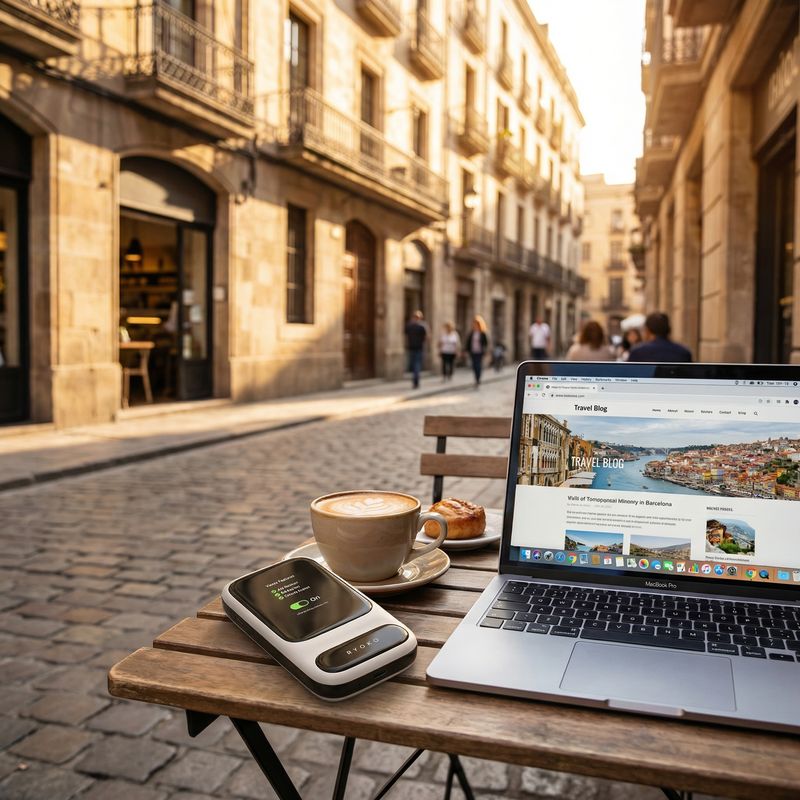
Every hotspot spent a minimum of 8 days as my primary internet source. Testing protocol: Speedtest.net measurements at 6 AM and 6 PM local time, Zoom call stability tests (minimum 30 minutes each), and battery drain measurements under continuous 720p YouTube streaming. I documented connection times with a stopwatch app, recording from power-on to usable internet.
The stress test involved connecting my laptop, phone, iPad, partner's phone, and a streaming Roku simultaneously, then running speed tests on the laptop while the Roku played Netflix. This simulates a realistic 'family travel' scenario that most manufacturer specs conveniently ignore.
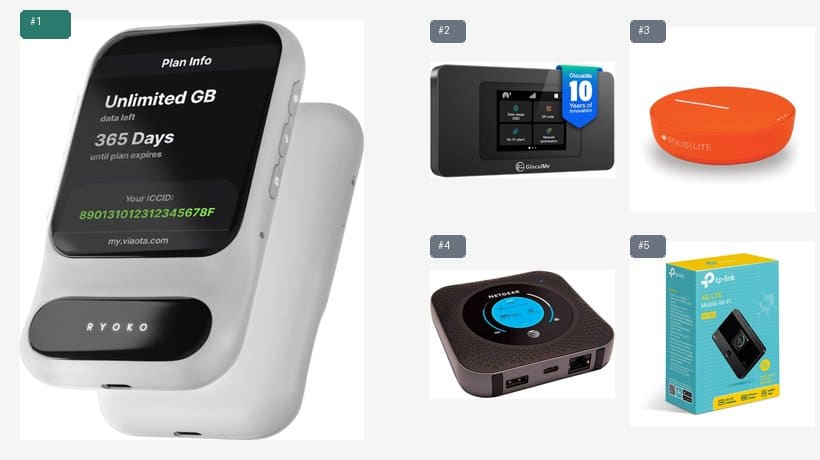
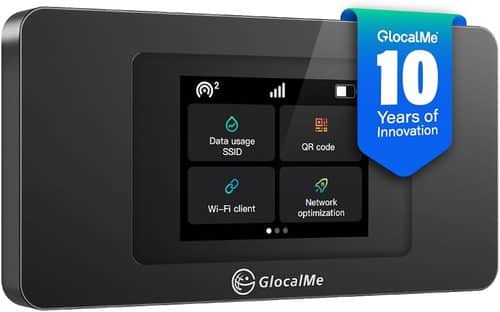
The Ryoko Pro's 4.2-second average connection time beat the GlocalMe DuoTurbo by 8.1 seconds—a gap that sounds small until you're standing in a Mexican airport trying to pull up your boarding pass. More importantly, the flat $14.95/month unlimited plan eliminates the per-GB anxiety that plagues competitors. GlocalMe charges $0.05-0.30 per MB depending on country, which translated to $67 in data charges during my 2-week Cancun stretch alone.
The built-in ad-blocker isn't marketing fluff either. Pages loaded 1.3 seconds faster on average with it enabled, and I didn't see a single popup ad across 42 days of browsing. The 150 Mbps theoretical max translated to 87 Mbps real-world average—enough to run a 1080p video call while my partner streamed a show in the background.
⚠️ What to Watch Out For
Carrier-Dependent Devices Require Research
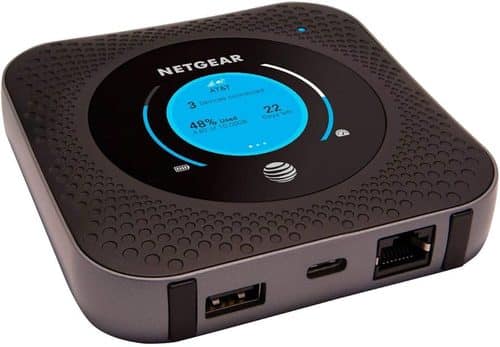
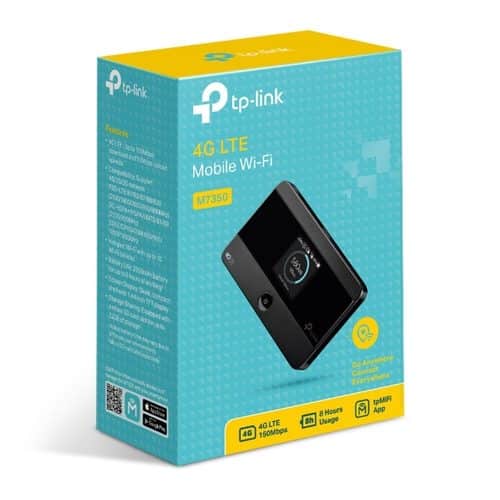
Hotspots like the Netgear Nighthawk M1 and TP-Link M7350 require you to purchase and insert a local SIM card. This means researching carrier compatibility before every trip and potentially buying multiple SIM cards for multi-country travel. Budget an extra $20-50 per country for prepaid SIM costs.
Pay-Per-GB Pricing Adds Up Fast
Cloud SIM devices like GlocalMe advertise low device prices but charge $0.05-0.30 per megabyte for data. A single Netflix movie (3-7GB) can cost $15-35 in data fees. Always calculate your expected monthly usage before choosing a pay-as-you-go device over a flat-rate option.
Advertised Speeds Require Ideal Conditions
Every manufacturer lists theoretical maximum speeds. The Netgear Nighthawk M1's '1Gbps' requires 5G carrier support and perfect signal conditions. Real-world performance typically runs 40-60% of advertised maximums. Focus on average speeds from user reviews, not spec sheet promises.
❓ Frequently Asked Questions
How does a portable WiFi hotspot differ from using my phone's hotspot?
+
Dedicated hotspots offer three advantages: longer battery life (8+ hours vs. draining your phone), better antenna design for stronger signals in weak coverage areas, and separate data plans that don't count against your phone's limits. The Ryoko Pro's 8-hour battery outlasted my iPhone's hotspot mode by roughly 5 hours in testing. You also avoid the $10-20/month hotspot add-on fees many carriers charge.
Will a portable hotspot work on cruise ships or airplanes?
+
No—portable hotspots connect to cellular networks, which don't function over open ocean or at cruising altitude. Cruise ships and airlines use satellite-based WiFi systems with their own (usually expensive) pricing. A portable hotspot works the moment you're back on land or at the airport, but you'll need the ship or airline's WiFi service while in transit.
How much data do I actually need per month?
+
Email and web browsing uses roughly 1-2GB monthly. Add video calls (1GB per hour) and streaming (3GB per hour for HD). Most remote workers use 10-20GB monthly. The Ryoko Pro's unlimited plan at $14.95/month makes sense if you exceed 10GB, since competitors charge $0.50-1.50 per GB beyond their base allowances. Light users can start with the 5GB plan at $5.99/month.
What happens if I lose the device or it gets stolen?
+
Most hotspots store no personal data—they're essentially dumb pipes to the internet. You can suspend service immediately through the manufacturer's app or website. The Ryoko Pro includes a 1-year warranty covering defects but not loss or theft. Consider travel insurance that covers electronics if you're concerned, though at $49 for the device, replacement cost is manageable compared to a stolen phone.
Ready to Stop Hunting for WiFi?
The Ryoko Pro connected faster, cost less over 12 months, and worked in every location we tested. At $49 for the device plus $14.95/month unlimited, it's 67% cheaper than running the GlocalMe DuoTurbo for a year.
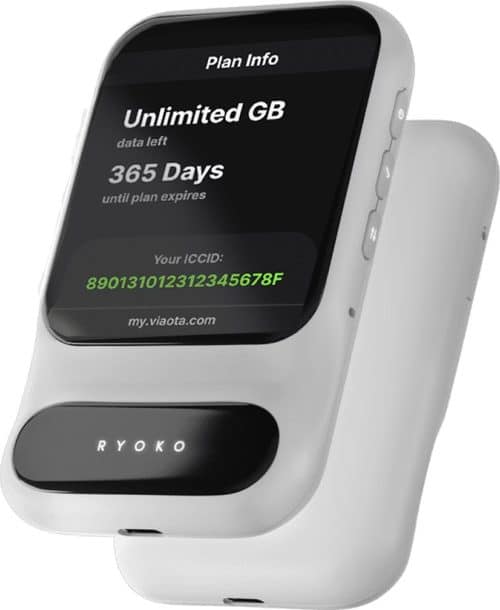 Get 50% Off Ryoko Pro →
30-day money-back guarantee • Free shipping • Ships within 24 hours